
Thursday 14 Oct 21
In many industrialized countries—including Denmark—the building stock is poorly utilized. Previous studies have shown that 50 per cent of residents find that they live in too large accommodation. In addition, many buildings are left unused or are only used for short periods of time during the day. The utility value of the very large investments in buildings is thus relatively low.
In addition, construction and production of building materials generate large quantities of waste. The main part of building materials from demolished buildings are not reused, but are downgraded and recycled: Bio-based materials are converted into energy by combustion, metal is remelted and used in new goods, and heavy materials such as concrete and brick are crushed and used as, for example, a base layer under roads. In the EU, construction waste constitutes 35 per cent of the total quantity of waste.
Construction and production of building materials account for significant greenhouse gas emissions. It is estimated that these emissions constitute 5-12 per cent of the world’s total carbon emissions. Rising urbanization and the growing middle class mean that the world will need to build more than what has been built in the past 4,000 years. This puts pressure on resources. 50 per cent of the materials we extract are used in construction. In several parts of the construction sector, companies expect increasing problems in obtaining adequate supplies of certain materials such as aggregates for concrete in the Greater Copenhagen area.
A sector development report from DTU recommends that the players in the construction sector join forces on large test projects and scaling of circular construction.
Circular construction—in which materials, whole components, or whole building parts are recycled—plays a central role in the transition to more sustainable use of the resources of nature. A sector development report from DTU concludes that a plan is needed for the quality requirements for recycled materials and components. There is also a need to develop test methods, education, and continuing education to accelerate the use of circular construction. The report has been prepared with input from a number of experts and players in the Danish construction industry.
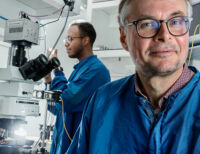
“Direct reuse of building components will mean less drain on natural resources for production of new materials. It also preserves and utilizes the resources already available in existing buildings. And the gain is greater the higher the level at which we recycle the materials, for example by renovating buildings or recycling entire modules in new buildings,” says Lisbeth M. Ottosen, Professor and Head of Section in Materials and Durability at DTU Civil Engineering.
Lack of demand for circular construction
In the sector development project, 30 domestic and international players in the sector point out that there is a lack of clear and sustained demand that can drive the market for circular construction. This applies to both building materials and building processes. There are two main reasons for this: firstly the market is new, and secondly the circular principles have not yet been implemented in rules on public procurement procedures, standards, certifications and the Executive Order on Harmful Substances.
Lisbeth M. Ottosen, Professor and Head of Section at DTU Civil Engineering.
"Direct reuse of building components will mean less drain on natural resources for production of new materials. And the gain is greater the higher the level at which we recycle the materials, for example by renovating buildings or recycling entire modules in new buildings."
An increasing number of architects, engineers, and clients are experimenting with circular construction. They are trying to incorporate from day one that building waste should not end up in landfills or as a filler under motorways, but be used in construction. However, the sector development report shows that, so far, circular construction mostly does not go beyond the pilot project stage.
Another response from the sector is that there are also major challenges on the supplier side.
The development of a market for a new technology typically depends on both a demand that can drive the development and on a supplier side that is constantly testing new products and processes and gradually drives down the risk, so that more parties on both the demand side and the supplier side take part in developing the market.
On the supplier side in Denmark, this role has currently been undertaken by some small firms of architects. Major firms of architects, developers, and contractors have a very positive attitude to this initiative, but medium-sized and large firms of architects are preoccupied with other important agendas. The sector development report concludes that this is a structural problem; that there is a lack of classic developers of the market on the supplier side to boost the development and scaling of circular construction.
Five recommendations for circular construction
The sector development report provides five overall recommendations for a plan for circular construction based on five pillars:
• Renovation of existing buildings must be a main fulcrum, but the initiatives must also comprise new builds.
• Building materials are recycled at the highest level, i.e. reuse of the materials that can technically be reused.
• Large and visible effects of the initiatives within all three burning platforms in construction: permanent access to resources, reduction of waste, and reduction of carbon emissions.
• Test projects must comprise testing of new framework conditions within the applicable legislation and the shared technological property and which can form a technical basis for actual scaling of circular construction.
• Denmark must be developed as a Living Lab for the whole world, with an ambition to contribute to meeting international challenges through research and innovation.
Research and innovation
The sector development report also contains recommendations for research and innovation, which is a prerequisite for the development of circular construction. The recommendations comprise the development of methods for documenting the quality of building components with non-destructive tests, which is a research project launched by DTU Civil Engineering with support from Innovation Fund Denmark and Realdania. In addition, the parties behind the report recommend that research be conducted into the development of methods for assessing environmental impacts of construction and the creation of technical knowledge about recycling and development of circular processes.