
Responding to a major outbreak
At the start of 2020, as it became apparent that the new respiratory disease first identified in China was beginning to spread beyond the country’s borders and healthcare professionals braced themselves for the oncoming storm, the global scientific community realised it had an important role to play.
Among these was Professor Ian Goodfellow from Cambridge’s Department of Pathology. Goodfellow was an expert in RNA viruses – viruses just like SARS-CoV-2, which was now spreading almost unchecked around the globe. Working originally on norovirus, he had shown that genetic sequencing could be used to track viral spread in a hospital setting, where an infection could cause serious complications for vulnerable patients.
But as COVID-19 began to take hold, Goodfellow faced an unusual predicament: all of his sequencing equipment was in the Democratic Republic of the Congo (DRC). He had taken it there in December 2019 to help a taskforce coordinated by the national research institute (INRB) to fight the emerging Ebola epidemic in DRC. (Fortunately, he was able to borrow equipment from the Cambridge community – and, within 24 hours of asking, began sequencing the SARS-CoV-2 virus in his lab at Addenbrooke’s Hospital.)
Until SARS-CoV2, Ebola was arguably one of the most serious – and terrifying – viruses to spread widely in humans since HIV. It causes a haemorrhagic fever that results in people literally bleeding to death in a half of all cases.
Although there were a small number of cases outside Africa – for example, a Scottish nurse and aid worker contracted the virus while working in Sierra Leone and was only diagnosed positive upon her return to the UK – most of the world escaped unscathed. In West Africa, however, the Ebola epidemic was devastating: more than 28,500 cases were recorded and 11,000 patients died. Countries including Guinea, Liberia and Sierra Leone united to try to contain the disease, but a lack of laboratory infrastructure and slow diagnostics hampered their initial efforts, allowing the epidemic to spread at an unprecedented rate.


Ebola virus particle (NIAID)
Ebola virus particle (NIAID)
In late 2014, Goodfellow headed to Sierra Leone to lend his support. Over the course of the epidemic, many more members of the Cambridge biomedical community – from the University and the diagnostic labs at the hospital – would join him, coordinated by Public Health England.
“I could see that the epidemic was getting out of control and that there were individuals like myself and my colleagues, molecular virologists, who had skills that would be useful, particular around diagnostics,” he says. “When it comes to Ebola, you need to identify people that are potentially infected, test them as quickly as possible and get them isolated if they’re positive.”
Goodfellow helped set up one of the first diagnostic laboratories in an Ebola Treatment Centre near Makeni, in northern Sierra Leone, with support from the UK government. He also established the Ebola Outbreak Sequencing Service, the country’s only genetic sequencing facility.
“You quickly realise the small things you take for granted,” he says. “So if you've got the wrong type of tubes and they don't fit in the centrifuge, for example, then you can't run your diagnostics. We didn't have a calibrated thermometer, so had no way of confirming that the temperatures required for heat inactivation of the samples were accurate. This meant in the first few months we had to do all the RNA extractions manually, which was a laborious, slow process.”
Poor internet capability meant he ended up sending results via his phone. “I ended up with a phone bill of £3,500!” he says.

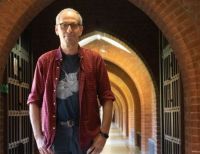
Dr Armando Arias
Dr Armando Arias
Over the course of the epidemic, the UK teams sent to work in the diagnostic lab that Goodfellow helped set up processed over 25,000 blood samples in the field. They reduced diagnosis time from seven days to 4–6 hours – vital for enabling non-infected patients, who would ordinarily be co-quarantined and potentially infected by diseased patients, to be discharged. (As an added bonus, they also detected cases of unrelated but treatable diseases, including over 750 patients with malaria who could then be given the appropriate treatment.)

Their work directly informed the WHO’s response strategy and provided the scientific basis for its coordinated quarantine and treatment of the 325 patients whose samples tested positive for Ebola at the Makeni treatment centre. Of the patients admitted to the treatment centre where Goodfellow worked, 40 individuals survived their infections.