

To prevent the spread of COVID-19 indoors, the two metres physical distancing guideline is not enough without masks, according to researchers from Quebec, Illinois, and Texas. However, wearing a mask indoors can reduce the contamination range of airborne particles by about 67 percent.
“Mask mandates and good ventilation are critically important to curb the spread of more contagious strains of COVID-19, especially during the flu season and winter months as more people socialize indoors,” says Saad Akhtar, a former doctoral student under the supervision of Professor Agus Sasmito at McGill University.
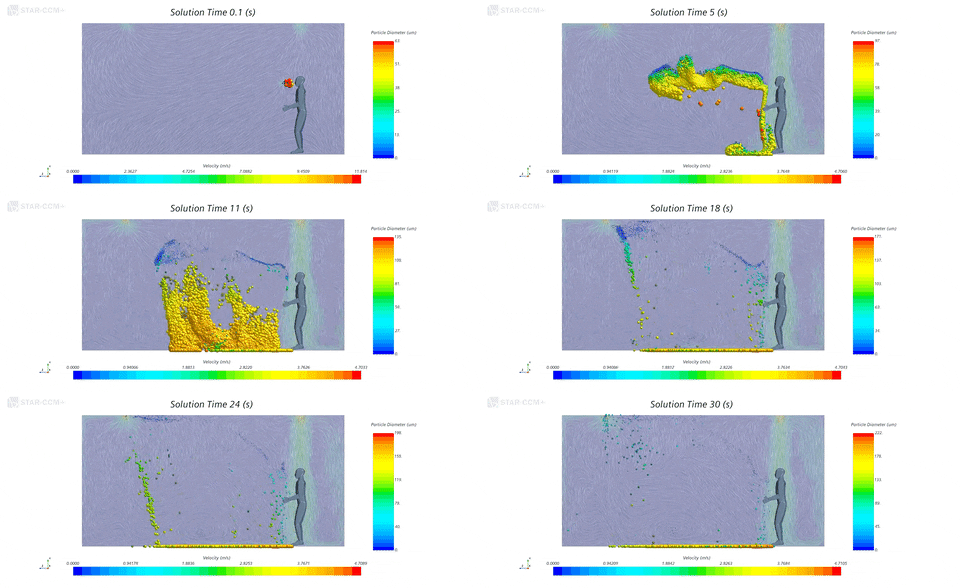
While most public health guidelines recommend physical distancing of two metres for people from different households, the researchers say distancing alone is not enough to prevent the spread of COVID-19. In a study published in Building and Environment, the researchers found that when people are unmasked, more than 70 percent of airborne particles pass the two metres threshold within the 30 seconds. By contrast, less than 1 percent of particles cross the two-metre mark if masks are worn.
Evolution of a cough
Evolution of a cough with mask
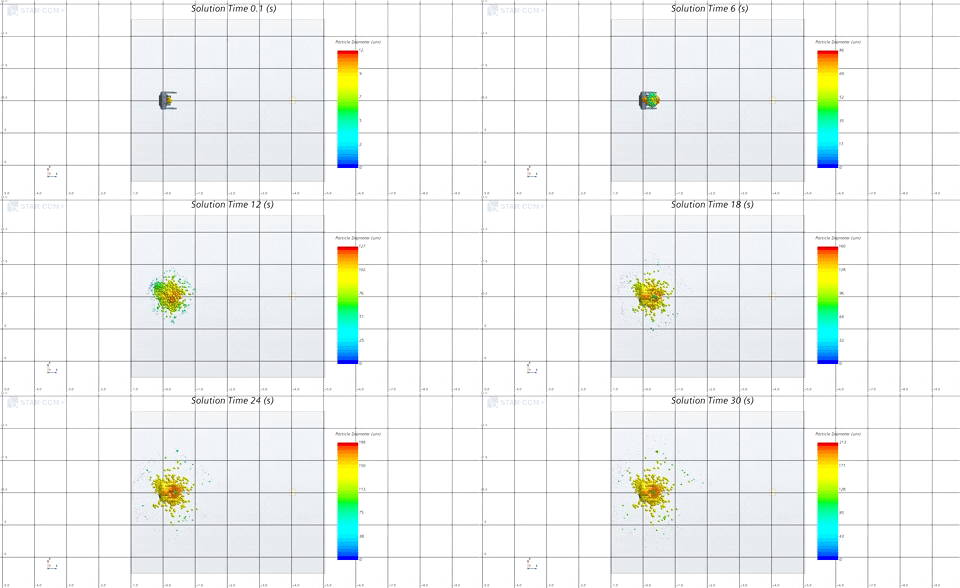
Simulating coughing dynamics
Building on models used by scientists to study the flow of liquids and gasses, the team from McGill University, Université de Sherbrooke, Texas A&M University, and Northern Illinois University, developed a computer program to accurately simulate coughing dynamics in indoor spaces.
While ventilation, a person’s posture, and mask-wearing impacted the spread of the bio-contaminants significantly, the impact of age and gender was marginal, the researchers found.
Coughing is one of the main sources of spread of airborne viruses from symptomatic individuals. “This study advances the understanding of how infectious particles can spread from a source to its surroundings and can help policymakers and governments make informed decisions about guidelines for masks and distancing in indoor settings,” says Akhtar.
About this study
“Implication of coughing dynamics on safe social distancing in an indoor environment—A numerical perspective” by Jayaveera Muthusamy, Syed Haq, Saad Akhtar, Mahmoud A. Alzoubi, Tariq Shamim, and Jorge Alvarado, was published in Building and Environment.
DOI: https://doi.org/10.1016/j.buildenv.2021.108280
About McGill University
Founded in Montreal, Quebec, in 1821, McGill University is Canada’s top ranked medical doctoral university. McGill is consistently ranked as one of the top universities, both nationally and internationally. It is a world-renowned institution of higher learning with research activities spanning three campuses, 11 faculties, 13 professional schools, 300 programs of study and over 40,000 students, including more than 10,200 graduate students. McGill attracts students from over 150 countries around the world, its 12,800 international students making up 31% of the student body. Over half of McGill students claim a first language other than English, including approximately 19% of our students who say French is their mother tongue.