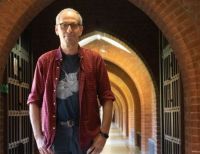

Professor John Bradley, an Honorary Professor at the University of Cambridge, set up the COVID-19 cohort of the National Institute for Health Research (NIHR) BioResource at Addenbrooke’s Hospital early in the pandemic, to enable studies involving large numbers of people. So far, detailed information has been collected from over 6,000 people who want to be involved in COVID research, including 500 who have tested positive for the disease – many of whom are healthcare workers who were asymptomatic but tested positive in routine screening.
“We need large-scale studies to be able to make reliable conclusions,” says Bradley. “We’re pre-screening people with a questionnaire before seeing them in clinic, so they can be triaged to the right clinicians according to their symptoms. We’re finding a wide range of longer-term problems including disorders of mood and brain function, respiratory symptoms, joint problems, fatigue, and issues relating to smell and taste.” Depending on their symptoms, patients can be recruited to various research studies for more detailed assessment.
SCRUTINISING THE IMMUNE SYSTEM
Professor Ken Smith, Head of the Department of Medicine, has just completed the first phase of what he believes to be the largest detailed study in the world of the immune response in COVID-19 patients over three months from the time of their initial diagnosis, monitoring 200 patients.
“The number of people involved in the COVID-19 BioResource has enabled Ken’s study to look right across the spectrum, from those who have had the disease with no symptoms at all, to those who were on ventilators in intensive care,” says Bradley.
Smith’s results indicate that almost all patients who experienced the disease, at all levels of severity, had cleared the coronavirus from their nasopharynx (the upper part of the throat behind the nose) by three weeks after infection. Symptoms after this time appear to be driven by persistent inflammation.
When our body is infected by a virus, our immune system responds by triggering inflammation to try and kill it. A certain level of inflammation is needed for the body to protect itself. But for some reason, in some COVID-19 patients the inflammation doesn’t go away. Smith says that the nature of the inflammation persisting in these patients appears to change over time, and may be related to the long-term features of the disease. Unravelling these details may shed light on why the virus affects people in such different ways.
"There seems to be something defective in the immune recovery of some people infected with COVID-19, which might drive ongoing disease."
The term ‘long COVID’ does not sit well with Smith. He says it’s “spectacularly imprecise”, as it refers to many quite distinct clinical problems that can follow COVID-19. These range from chronic lung or neurological problems that persist in patients who have required prolonged intensive care for COVID-19, though to persistent fatigue - which may sometimes be attributed to COVID-19 even without evidence of infection. He thinks the latter is likely to be related to other ‘post-viral’ chronic fatigue syndromes.
“These very different problems need different solutions, and lumping them together under the banner of ‘long COVID’ may make that more difficult to achieve,” says Smith. “Our research needs to focus on well-defined clinical problems that follow COVID-19 if we are to find solutions to help patients.”
SCRUTINISING THE BRAIN
Elsewhere on the Cambridge Biomedical Campus, Professor David Menon is working with colleagues in the NeuroCOVID group to undertake brain imaging and other investigations in participants from the COVID-19 BioResource. He is trying to pinpoint ‘modifiable mechanisms’ underlying long COVID: changes in the body, after the acute phase of the disease has passed, that can be targeted with treatments. His focus is on patients who have suffered serious COVID-19 and then developed long-term complications.
“We’re running a follow-up clinic for COVID patients who have been in intensive care. After six months, about 20% of them have depression or anxiety, and 30% have problems with memory and concentration. A lot have severe fatigue,” he says. “While these symptoms are expected in people who have had an episode of critical illness, they seem a lot more serious in COVID patients.”
Taking advantage of the Wolfson Brain Imaging Centre’s position right next to Addenbrooke’s Intensive Care Unit (ICU), Menon’s team in the Department of Medicine has been able to scan the brains of even the sickest patients from the ICU to look for structural changes. They are also testing these patients’ cognitive abilities six months after their acute illness. Early results indicate that brain function is not as good as in healthy people of the same age.