Before the digital age, physical models dominated the teaching sphere, giving tangibility to often abstract concepts. Clastic anatomy models able to be disassembled invented by Louis Auzoux in the 19th century, for example, were made with a high degree of accuracy. These were embraced by medical students throughout the world as an alternative to cadavers.
The artisanship behind their production was often remarkable. Auzoux’s models demonstrated a mastery of papier-mâché. Similarly, Leopold and Ruben Blaschka’s glass works, also featuring in Micro:Macro, are celebrated for their artistry as much as their resemblance to the sea life they replicate.
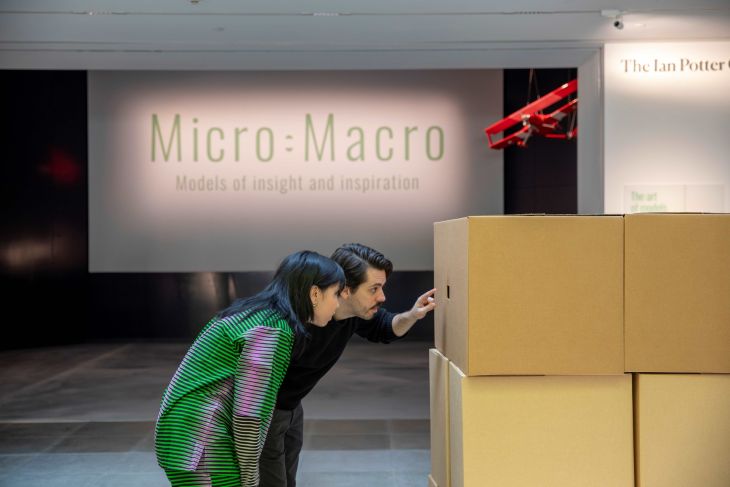
“Digital platforms have partly replaced physical models but Micro:Macro celebrates many of the models as works of art and ingenuity,” said Chau Chak Wing Deputy Director and exhibition curator Dr Paul Donnelly
Showing in the museum’s largest exhibition space, the Ian Potter Gallery, Micro:Macro also includes models, such as aeronautical models, which haven’t been usurped by newer technologies.